|
This summer coastal towns in Japan were visited by an unusual number of sharks, mostly of the shy hammerhead variety. Reports vary but a school of up to thirty hammerheads was spotted off the coast in relatively shallow water. The sharks were tracked from the sea and air by the Coast Guard and showed no signs of interest in humans as they moved down the east coast into two bays just a few hours drive South of Tokyo. While individual sightings are not uncommon to these areas the prolonged and increased presence of the visitors caused authorities to raise the alarm and close beaches in some towns. As luck would have it, the closures occurred during the four-day national holiday period of Obon, taking a bite out of local tourism. General consensus is that the sharks were drawn to the coastal waters due to changing migratory patterns of fish lower down in the food chain, in turn caused by a change in the temperature and path of the Kuro-Shiro current that runs along almost the entire length of Japan’s lower coast in the North Pacific Ocean and transports warm tropical water to the polar regions. Compared to Australia, which has recently seen an unprecedented – and so far, inexplicable - spike in shark attacks, South Africa and the US, the number of incidents involving humans and sharks is almost negligible in Japan. Hammerhead sharks are mostly harmless to humans, with only 3 of the 9 species linked to incidents involving people. They are found worldwide in tropic and sub tropic waters, preferring to live in deeper areas. Due to their large fin size they are targeted by fisheries and the (mostly illegal) fin trade, but also fall victim to the indiscriminate practice of long-lining. In 2013 CITES (Convention on International Trade in Endangered Species) recognised 3 species as endangered and passed laws regulating their trade. On a personal level, I am a lot more conscious of the dangers of jellyfish. I have been stung three times this year: once in Perth, Western Australia and twice in Hayama, Japan. While not very painful, the stings drape me in unsightly welts that itch for days. Compared to a shark-bite the discomfort is insignificant of course. On my trip to Australia’s Gold Coast last month I was aware of the usual possibility of sharks in the area, but with a life guard station every several hundred metres I felt relatively at ease. What did worry me was seeing several dead ‘blue-bottle’ jellyfish that had been washed up on beach. A single painful touch from a blue-bottle years ago forced me to leave the water and seek medical attention as my entire arm went numb, breathing became laboured as I went into mild (but intensely experienced) anaphylactic shock. Of all the numerous varieties of jellyfish I am wary of these little creatures the most! The bad news is that recently there has been a dramatic increase in the number of jellyfish around the world. Globally, the warming of our seas through the absorption of carbon dioxide is resulting in ocean acidification. The higher acidity reduces the amount of oxygen in the water. In addition to growing coastal development and overfishing, the decrease in oxygen means that there are now fewer, and smaller, fish alive to feed on jellyfish resulting in “explosive population growth” which has recently been the cause of crises around the globe. In 2013 seawater vents used to cool a Swedish nuclear reactor became so clogged up with jellyfish that the plant had to be temporarily shut down. A year before that, in Japan a thermal power plant went offline until the creatures were removed from the water around the cooling vents. And recently the French Riviera has become so inundated that tourists now pay more attention to jellyfish warnings than weather advisories The increased numbers are effecting recreation and economies worldwide. Growing up in Cape Town’s False Bay I was lucky to be surrounded by a community of surfers, divers and other water people who were educated about sharks and had balanced attitudes towards these apex predators. But on the whole, we humans still have a lot of work ahead when it comes to understanding the oceans, the creatures in them, and how to live with them. Sharks have been around for about 400 million years and have survived at least 5 ice-ages as well as the extinction of the dinosaurs; but jellyfish are the oldest multi-organ creature known and are at least 500 million years old. As climate and ocean conditions continue to change I have a feeling we will need to learn more about jellyfish quite soon. Sources: www.sharks-world.com/hammerhead_shark/ asia.nikkei.com/magazine/20150205-Changes-in-the-air/Tech-Science/World-worries-as-jellyfish-swarms-swell www.japantoday.com/category/national/view/shark-sightings-continue-at-beaches
1 Comment
 Perfect silence, endless moment... Holding your breath and immersing yourself in silence can change your life. Kids instinctively do it for fun at bath time or in the pool, but as we grow older we tend to forget simple pleasures. It's been 2 years since my introduction to free-diving on the island of Koh Tao, Thailand with ApneaTotal and I still feel the lure of perfect silence underwater. If you've never heard of it, freediving(or apnea diving) - descending on a single controlled breath - is an almost spiritual art, blending mental discipline with the science of physiology. Freediving is one of the fastest growing sports, but it's really so much more than a sport. As the best in the field demonstrate, the discipline merges the science of body and mind to create an experience that is both addictive and totally uplifting. Whether you're counting off seconds of breath or measuring distance in metres, the experience of apnea is synonymous with descent into oneself. And since there's virtually no equipment, few disciplines test trust in oneself, and in those looking out for your safety, as freediving. The Origins of Freediving From the Baltic and Mediterranean Seas in the north to the coasts of South America and countless islands in between, humans have been gathering food from the seabeds for around 10,000 years. Traditional apnea divers in Japan, the Philippines and Polynesia, still make regular daily descents on a single breath as they continue this ancient ritual. Generally using some form of goggles or mask, a weight device and little else, these aquatic men and women commune with the ocean in a way unlike any other. Since the advent of competitive freediving in 1949 men and women have pushed themselves and each other to not only discover the secrets of the depths, but to also test the limits of human endurance. The 1998 film The Big Blue, a fiction highlighting the exploits of the legendary Jaques Mayol, did much to popularize, and romanticize, the sport and helped spawn a generation of intrepid underwater athletes. Apnea Equipment and the Various Disciplines Compared to that of a scuba diver, freediving equipment is simple, yet every item is designed to ensure maximum efficiency. Apneaists use a smaller more flexible mask, two longer fins or a monofin, a rubber weightbelt, and often a nose clip which aids breath holding. Scuba diving suits may be used though professionals prefer lighter single cell suits. In the water, technique focuses on controlled yet relaxed movements to ensure divers are as aquadynamic as possible while conserving energy and therefore oxygen. The freediving disciplines vary considerably. From Static Apnea, in which the athlete holds his or her breath for as long as possible in a pool, to the most daring and dangerous No Limits descent, where divers may use any amount of weight to achieve maximum depth and return to the surface using a choice of inflatable device, apneaists explore a number of underwater challenges. Whatever the discipline or equipment, each modality brings the chance to face not only the ocean but also oneself at a deeply personal level. Outside the water, preparation includes yoga breathing techniques, meditation, as well visualization to achieve and maintain the all-important restful mind. The Science and Safety of Freediving As with scuba, being able to compensate for pressure changes through the ears is a prerequisite. Like dolphins ad whales, humans also experience a set of automatic physiological responses to increased pressure. These changes include bradycardia (slowing of the heart), contraction of the spleen (resulting in more oxygen being squeezed into the circulatory system) and blood shift (where blood leaves the extremities and is directed to support the heart, lungs and brain). The responses, triggered by immersing the face in water, slowed breathing and changes in pressure on the body, are what allows divers to comfortably reach depths of 30 - 40 metres and beyond for extended periods without being crushed by ambient hydrostatic pressures. Safety rules are clear and simple: Hyperventilation is best avoided as it can lead to blackout underwater. And never, ever, dive alone. Blackouts in themselves are not dangerous and tend to happen at, or near, the surface but will be fatal unless a trained and alert safety diver is on hand. Also, due to demands on the body during a dive, eating within 4 hours before is not recommended. Depending on the discipline, foods which promote blood acidity or alkaline levels should be taken. The sages tell us that infinity is to be found in the present, in the space between breaths. Proficient freedivers are able to forget the breath and celebrate the now. As underwater adventurer and photographer Wolfgang Leander (music plays when the site opens) says, "I submerge, open my eyes and dream." What could be better than living a dream? 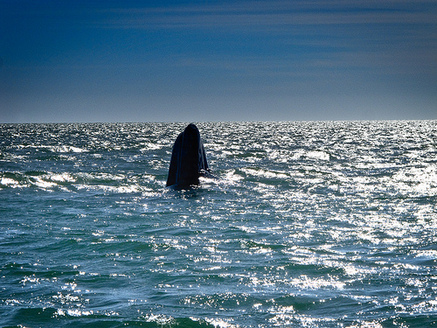 Photo by John Bruckman. Photo by John Bruckman. This November marks the second month of the imprisonment of the Arctic 30 - a group of Greenpeace activists arrested by Russian forces for peacefully protesting against oil-drilling in the Antarctic. It's also the month that, according to the UN, the world has officially lost the last Western Black Rhino. Poachers with automatic weapons have successfully hunted these creatures off the face of Africa to satisfy markets based on superstition and vanity. Canadian Paul Watson has been called many names, and in the eyes of the law the jury is still out. But one thing is clear: When it comes to protecting ocean wildlife against poachers -'legal' or otherwise - he gets the job done. After breaking ties with Greenpeace, Watson founded the immensely successful Sea Shepherd which has been a thorn in the side of whaling nations, particularly the Japanese. Earlier this year, a litany of complaints of "unforgivable sabotage" by Japan's Institute for Cetacean Research (ITC) led the USA - which seems content to allow the wholesale slaughtering to continue - to brand him "a pirate". A US court imposed an injunction against Watson preventing him from coming with 450 metres of their whaling fleet. Watson agreed to abide by the ruling, stating that Operation Zero Tolerance had been an "enormously successful harassment campaign". The ITC target to kill 1000 whales in 2013 fell hopelessly short at only 103 through Sea Shepherd's intervention. His organization's website claims Japan's ITC is a poorly disguised front for illegal fishing and has nothing to do with 'research'. It's well-known that Japan's outdated whaling industry is flailing and relies heavily on government subsidies to stay afloat. In 2002 Costa Rica accused Sea Shepherd, after requesting help from the organization in apprehending illegal fishing vessels, of reckless endangerment involving the crew of a local ship. However the documentary Sharkwater seems to show clear evidence to refute these charges, and also captured footage of fairly entrenched shark fin trading by the Taiwanese mafia under the noses of the Costa Rican government. Fearing the impossibility of a fair trial the crew and film-makers fled the country. What ensued was a long and drawn out saga that ended in Watson being arrested in Germany last year. Fearing extradition to Costa Rica, he subsequently skipped bail again, and until this month had been at large and at sea for 15 months. In the meantime both Japan and Costa Rica stepped up efforts to have him apprehended and his notoriety peaked when Interpol issued a 'Red Notice' for his arrest - an alert usually reserved for terrorists or those deemed a serious threat to society.. Costa Rica has since dropped the red notice, and Watson came ashore this month to testify in a case involving Japan's ITC. With the support of Sea Shepherd's Bob Brown, former Australian Greens Party leader who took over as head of the group when Watson stepped down, they will show that Watson is no longer in charge of anti-whaling activities. The new Operation Relentless, spearheaded by Brown, promises to be as intolerant of wildlife destruction as it's forerunner. Costa Rica has appealed via diplomatic channels to have Watson re-arrested, but US authorities have yet to respond. 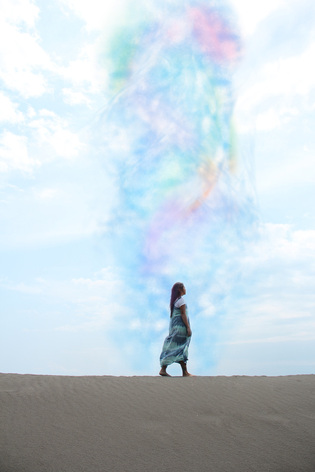 'Walk in Colours' by Elina Fukuda. 'Walk in Colours' by Elina Fukuda. We live in an amazingly abundant world. The challenge is learning how to responsibly access, and share, what is available. Particularly in local areas where the normal facilities are scarce, non-existent, or difficult to put in place. The result: Local solutions to local problems with global potential.
Lima, Peru: Engineers have put “imagination into action” by creating a billboard advert that literally turns air into drinking water. The project was launched in an arid rural village where access to clean water was a daily struggle. Researchers wanted to take advantage of the air humidity which can be as high as 98%. Scientist's from Lima's University of Engineering and Technology teamed up with a local ad-agency to created a panel display that traps the humidity, condenses it, then filters the water and stores it in tanks above the structure. The advert currently produces up to 96l a day and is accessible to everyone in the village. France: In the isolated mountains of Northern France, inventor Marc Parent, pondered the issue of “intelligent water management”. The result was a 15 metre-high wind turbine. The turbine sucks in air and then uses self-generated electricity to cool the air until it is transformed, through condensation, into water. Designed for remote areas, the model can be installed in an hour and produces up to 80l of filtered drinking water a day. India: In a land where some 800 000 000 people lack safe drinking water, and even more have to do without basic sanitation, innovators have found an ingeniously cheap and simple way to tap “a guaranteed source” of daily water. Huge plastic sheets, spread out on the ground and kept at temperatures lower than the ambient temperature are being used as “dew extractors”. The sheets collect condensation from the atmosphere, which then simply flows into storage units. Perfect for rooftops, the method can provide a family with 10l of filtered drinking water night, or up to 40l for larger structures. Water extracted in this way is currently a third of the cost of commercially provided water, and thus also affords families a potential source of income should they want to sell it. Israel: A technology firm, tackling the issue of “portable water generation” for mobile troops, has hit on a solution that can actually benefit all people everywhere. Watergen is a small unit that uses the same principles as a standard air-conditioner to filter incoming air and extract water from it. Attached to the outside of a tank or troop carrier it can produce from 20 – 60l a day depending on environmental conditions. Looking beyond the military scope, its inventors hope to have the United Nations pick up this water generation technology for use in remote or disaster-struck areas. All these local solutions seek to put power back into the hands of individuals and communities. As production increases and technologies improve time and monetary costs will go down and health, safety and well-being will continue to rise. Localizing water production is also a teaching tool that encourages more responsible use. A spokeswoman for the university in Lima mentioned the need to attract “creative minds”, stating”We want to change the minds of future engineers...” We all need to change. Each year global military spending far exceeds what it would take to eradicate world hunger and address the water crisis. And every day precious water is lost, or diminished in quality, due to poor management. There is enough for everyone. Everyone can be an innovator.  Photo by Barry Peters. In my blog entry 2011:Year of the Shark I noted the many resolutions that had taken place around the world on local and national scales to protect sharks from finning and long-line fishing. In March this year CITES (the Convention on International Trade in Endangered Species of Wild Fauna and Flora) weighed in on the side of marine life and made governments place shark conservation on their agendas. Its 178 members countries oversee the protection of more than 30 000 species of plant and animal life and, through legally binding agreements, CITES can impose sanctions on governments that fail to implement its resolutions. Despite severe opposition from Japan, China and India proposals to protect three species of hammerhead, as well as porbeagle and oceanic whitetip sharks, manta rays and sawfish were approved by a majority of just over 1%. The credit for this victory lies in the unity shown by Latin American members. International wildlife trade accounts for billions of dollars in revenue and CITES can now insist on responsible controls to prevent further exploitation of these species. Since it has no say in domestic policy-making, but only the regulation of international trade, it remains to be seen how much pressure the Convention will actually exert on members. Without imposing sanctions the resolutions has no teeth. A significant problem in tracking and controlling the international trade, far beyond the loopholes that individual members countries allow in their domestic fishing policies, is the fact that many illegally caught sharks and rays are transferred from boat to boat in the unmonitored space of international waters. Tuna vessels, often guilty of indiscriminately hauling in sharks with their catch, present the member states with the greatest challenge. Poorly managed tuna fishing is thus a related problem and one that will have to be addressed alongside protecting the larger aquatic life forms. The issue at stake is really the commitment to the policing of the high seas. We have seen how the international community has recently responded to the threat of pirates off the coast of Somalia with armed patrols to protect human and commercial cargo. It will be interesting to see how the growing need to respond to poachers plays out. Environmental groups and scientists have already made arguments, simple yet forceful enough, to convince us that our fate is bound up with that of the oceans, and so in effect any plundering of already endangered species is an indirect attack on humans too. Additional Sources: Landmark Shark Ban Upheld at Conservation Meeting CITES Makes Historical Decision to Protect Sharks and Rays 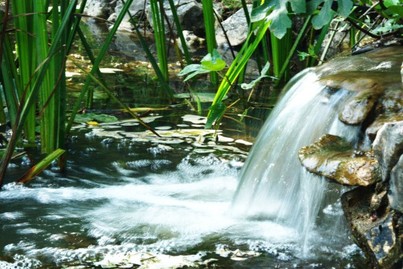 Flowing water/ gnuckx. March 22nd is World Water Day so I thought I'd write about a man who devoted his entire life to water. Viktor Schauberger(1885-1958) was an Austrian nature conservationist and forester whose maxim was "Comprehend and Copy Nature", and spent most of his life in the woods deeply observing the behaviour, characteristics and function of water. "Water in its natural state shows us how it wishes to flow, so we should follow its wishes." Schauberger observed thae forest to be not merely a consumer of water, but in fact its creator and protector. He saw that tree shade was essential to healthy water and distinguished between mature water (able to give energy and promote creation) and immature water (juvenile in nature, leaching from its environment until it reached a more enriched state). Because of this he cautioned against drilling down to extract immature water, in favour of nurturing natural well points where water flowed upwards because nature was ready to share it. He also saw the connection between water's vitality and its temperature, noting 4 degrees celcius as optimal for providing the best energy. In rivers he observed trout swimming into "conically-shaped" streams that seemed flow uphill against the main body of water, and that they were then pulled upwards and out of the water, allowing them to swim upstream. Noting other instances of opposing spiral forces in water and air led him to realize that energy is created through the interplay of expansive and contractive forces. He began to think in terms of "vortex energy" and observed two complimentary processes at work in nature: Centripetal spirals that drew inward toward a centre were contactive, based on principles of implosion, and reduced temperature. This force uses tremendous pressure to gather materials and promote growth and new life. The other centrifugal, explosive, force moved outwards from the centre, raised temperatures, broke down and scattered matter. He was very criticl of humanity's use of this latter process for energy production, citing coal, oil and nuclear energies as wasteful and ultimately harmful to nature. In 1934 he was summoned to a private meeting with Hitler to explain his theories on creating energy from air and water. In 1938 he invented a machine that produced electrical energy from a low pressure flow of water, and when the war broke out Schauberger was forced to work in an SS laboritory to create air fueled planes. 1943 he ran successful levitation experiments using "colloidal" motion. The energy was derived from placing water or air into a twisting form oscillation, known as "colloidal", which caused a build up of energy. After the war American troops found and confiscated a working model of a "flying saucer" that used water, air ad an electric charge. they were so concerned by his knowledge of atomic energy that he was detained and held him under close guard for six months and later forbidden him to work on atomic energy production research. Similarly, Russian troops confiscated models and research from his home, burning the apartment when they left. "Water is the raw material of every culture or the basis of every bodily movement and spiritual development." Schauberger realized that kind was unwittingly destroying the earth by opposing nature. His life's work was to bring about awareness of more natural based, environmentally friendly methods for living. Unfortunately he was unable to convince most people, partly because he was not one to suffer fools or combative members of the establishment; an partly because in addition to his lack of a formal scientific education, the mathematics of his day could not convert his concepts into theory. He died in relative obscurity after a traumatic experience in America that amounted to house arrest for three months. In his lifetime he developed water purification systems and showed how water and air can be reliably used as fuel. His ideas on vortex energy and their applications are still being explored today Sources: Living Water, Olof Alexandersson Viktor Schauberger/ World Living Water 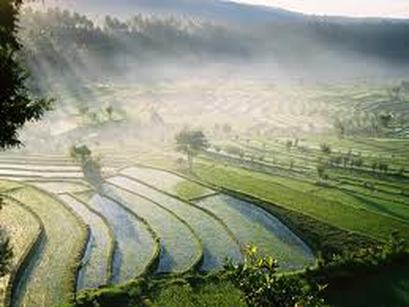 Terraced rice fields, Bali Island. Nestled among the multitude of islands that make up Indonesia lies the tiny paradise of Bali, one of the most sought-after getaways for ocean lovers, artists, culture vultures, yoga practioners and anyone in search of something exotic yet mild. Last year The United Nations Educational, Scientific and Cultural Organization (UNESCO) acknowledged another reason to visit Bali by designating its ancient collection of water temples and cooperative irrigation systems as a new World Heritage site.The Royal Water Temple of Pura Taman Ayun, dating back to the 18th century, is said to be an impressive example of how Balinese architecture, spirituality and culture merge to serve the community. Here temples are the focal points for communal networks of rice fields that share the waterways. These communities, known as subaks, allow for the distribution of water in a way that ensures not only all farmers have sufficient share in the resources, but also the highest output of crops in the country. The temples serve as a focal point for these interdependent communities, and practice the philosophy of Tri Hita Karuna, which draws together the dimensions of spirit, the human world and nature. As the water flows down the mountains through the temples to nourish the land, rituals and celebrations are held not only to show reverence to nature but also to bind the people together in a common and uplifting purpose. This centuries old tradition of the egalitarian subaks has managed to do what Indonesia'a modern farming methods, no doubt informed by global practices and corporate products, has failed to do. Opting for a plan uninfluenced by government, It has shown how a decentralized system run by the farmers and communities can ensure enough resources for all. By rotating crop fields it has created very high yields, despite it's mountainous terrain and large population, because the soil is not over-farmed and depleted of minerals. And through coordinating these periods of high yield with stages where large ares of the landscape are left fallow they have been able to starve off and essentially eradicate pests without the use of toxic pesticides. When natural disasters strike and people are left without immediate aid there are often calls for a change to the models on which most urban and rural developments are based. Words like "decentralized", "self-sufficient", "grass-roots" and " local resource management" are bandied about, and then slowly forgotten as government agencies eventually trundle in and allocate aid. Bali's water temples and terraced rice fields, and other systems like it, may well hold the keys not only for greater cooperation within local communities - but also between nations. The Nile River runs through Kenya. Eritrea, Congo, Burundi, Uganda, Tanzania, Rwanda, Egypt, Sudan and Ethiopia. Some of these nations have promised a military response to any crisis in their water supply. China continues to build dams on the Brahmaputra River in Tibet despite concerns from India and Bangladesh. Tri Hita Karuna, merging the spirit, human world and nature: Managed correctly, water can unite and elevate us. Source: Cultural Landscape of Bali  Rain forest by John.
"Be the change that you want to see in the world" - Mahatma Gandhi 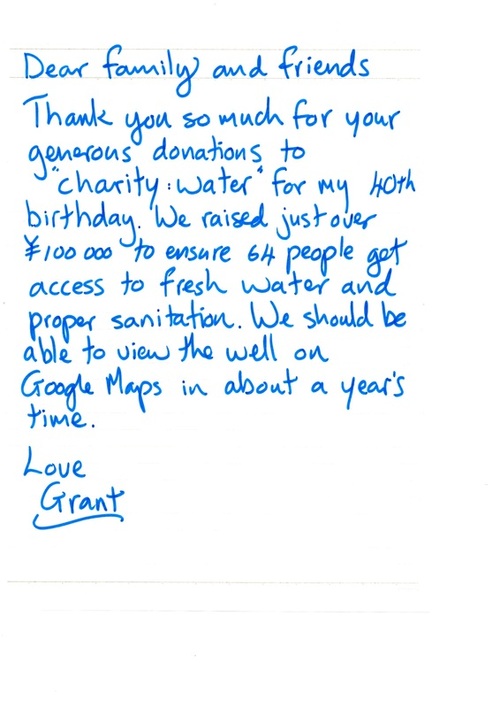
 Hawaii made history in May this year becoming the first US state to ban single-use plastic bags. Spearheaded by Surfrider Foundation and Sierra Club Hawaii the move to get people using their own reusable bags, bottles and plates has spread throughout the islands. With previous legislation having already taken effect on Maui and Kauai islands significantly cleaner beaches and shallow waters are already evident. For some reason Oahu is lagging behind but will stop providing plastic bags in 2015. Also in May, Los Angeles joined the ranks of 47 other Californian cities in banning plastic bags. By the end of the year customers will need to take their own bags when they go shopping. As the largest city and consumer market in the state, as well as being a hub for international tourists, the new law is expected to remove 2.7 billion plastic bags from circulation. And there are already discussions about reducing the use and impact of plastic bottles in the city. What's behind all these new laws? Because plastic bags are made from petroleum they cannot be normally recycled, and they don't decay in landfills. Those that make it to the sea are eventually broken down through sunlight and wave action into fingernail-sized pieces or smaller. These bags and other forms of tiny plastic waste termed "microplastic" have been found all over the world. Greenpeace International estimates that plastic of various sizes is responsible for the deaths of over a million sea birds and a hundred thousand sea mammals and turtles annually. In a recent survey of the Pacific, Scripps Institution of Oceanography found a 100-fold increase in floating plastic waste. North of Hawaii, in an area known as the North Pacific Gyre, the alarming effects can be seen with the naked eye. Here the currents circle in a slow clockwise direction and have gathered our discarded waste to create a floating mass of plastic roughly the size of Texas, or twice the size of France. The same study found microplastic in 9% of fish sampled and estimates that fish in the intermediate depths of the Pacific could be ingesting 12 000 - 24 000 tons of plastic a year. Critics wonder, "So what will fewer plastic bags do?" Well, it's a start. It's a step asking us to weigh convenience against responsibility. It requires us to put a bit more thought into the act of purchasing items. The difference between what we need and what we use has never been greater. If we extend this planet-friendly thinking to packaging and product manufacturing the world really would see a difference, just like on Maui and Kauai. Nature doesn't waste anything. Neither should we. Sources: Plastic waste garbage floating in Pacific Ocean has increased 100-fold Hawaii Becomes the First State in the US to Ban Plastic Bags! Los Angeles Becomes the Largest US City to Ban Plastic Bags The Trash Vortex 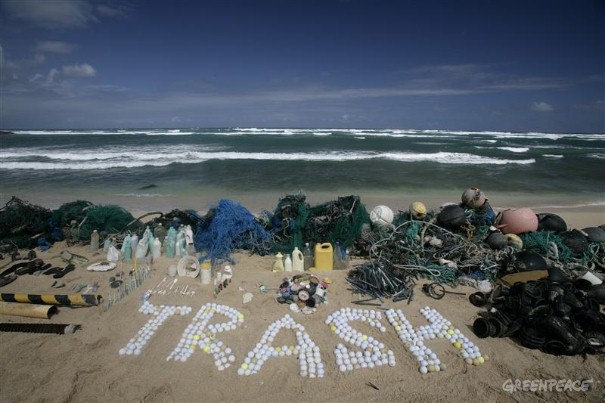
Golf balls tell the story.
|
Archives
November 2015
Categories
All
|

 RSS Feed
